
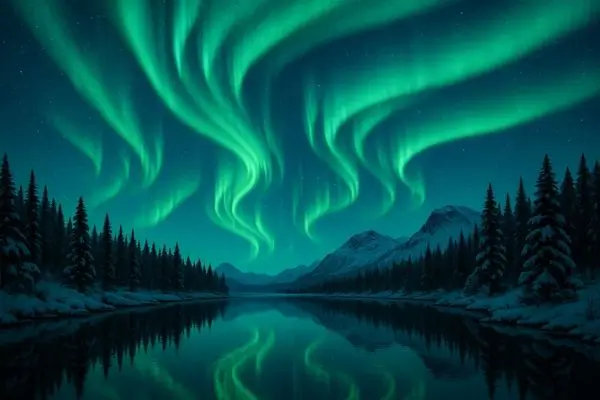
Northern Lights Tonight: If you’ve ever dreamed of watching the sky burst into waves of green, pink, and purple light, tonight might just be your chance. The Northern Lights, also known as the Aurora Borealis, are one of nature’s most stunning light shows—and yes, sometimes they can be seen far beyond Alaska or Canada. This guide will help you check if the Northern Lights might appear over your state tonight, where to look, and how to prepare for the best viewing experience.
Main Topics
Table of Contents
What Causes the Northern Lights?
The Northern Lights form when charged particles from the sun collide with gases in Earth’s atmosphere. These collisions release bursts of light that paint the sky in shimmering colors. The strength of this activity depends on solar storms—massive eruptions on the sun that send waves of energy toward Earth.
The level of aurora activity is measured by something called the Kp Index, which ranges from 0 (calm) to 9 (severe storm). Generally: (hstech)
- KP 4–5: Visible in northern U.S. states like Washington, Montana, and North Dakota
- Kp 6–7: Reaches farther south—sometimes into Missouri, Colorado, or even Kansas
- Kp 8–9: Rare, but possible to see in southern states
How to Check if You’ll See the Aurora Tonight
You don’t need to be a scientist to predict the lights. Here are a few reliable ways to find out:
1. Use a Live Aurora Forecast Map
Websites like NOAA’s Space Weather Prediction Center and AuroraWatch provide real-time maps showing where auroras are likely to appear. Look for the green or red “oval” that moves across the map—it shows where visibility is strongest.
- NOAA Aurora Forecast: swpc.noaa.gov
- Aurora Forecast by University of Alaska: auroraforecast.gi.alaska.edu
2. Check the KP Index
Search “current KP index” to see the solar storm strength. If it’s Kp 6 or higher, there’s a good chance you’ll catch a glow even in the lower 48 states.
3. Follow NASA and Space Weather Alerts
NASA’s Aurora Forecast tools track solar storms and predict aurora visibility. Following NASA’s @NASASun or NOAA’s @NWSSpaceWx on X (formerly Twitter) is a quick way to receive instant alerts.
4. Use an Aurora Mobile App
Apps like My Aurora Forecast, SpaceWeatherLive, or Aurora Alerts send notifications when activity is high in your area. Enable location access to receive only alerts relevant to your state.
Best States to See the Northern Lights in the U.S.
Some states have a better chance of seeing the aurora due to their location and lower light pollution. Here’s where you might get lucky tonight:
| State | Top Viewing Spots | Visibility Chance |
|---|---|---|
| Washington | Mount Rainier, Olympic Peninsula | High during Kp 5–6 |
| Montana | Glacier National Park, Flathead Lake | Very High |
| North Dakota | Theodore Roosevelt National Park | High |
| Minnesota | Voyageurs National Park | Very High |
| Michigan | Upper Peninsula, Lake Superior shores | High |
| Colorado | Rocky Mountain National Park | Medium (Kp 6+) |
| Missouri | Mark Twain National Forest | Low to Medium (Kp 7+) |
Tip: The darker your surroundings, the better your chances. Drive away from city lights and look north toward the horizon.
Best Time to Watch the Northern Lights Tonight
- Time: Between 10 p.m. and 2 a.m. local time
- Direction: Face north (use a compass app if you’re unsure)
- Weather: Clear skies are essential—clouds can block the view
- Moon Phase: A new moon gives the darkest skies and best visibility
If your area is cloudy, try checking live-stream cameras on YouTube or on the Aurora Network that broadcast real-time Northern Lights from Alaska, Canada, and the northern U.S.
Photography Tips for Capturing the Aurora
Even a smartphone can capture this phenomenon if you adjust a few settings:
- Use night mode or manual settings (ISO 800–1600, shutter 5–10 seconds)
- Place your phone or camera on a tripod to avoid blur
- Focus manually to infinity and set the exposure low
- Capture a foreground element like trees, mountains, or a lake for depth
What to Do if You Miss Them Tonight
Don’t worry—aurora activity happens frequently during solar maximum (a period of high solar activity that peaks every 11 years). The current solar cycle is active through 2025–2026, meaning more opportunities ahead.
Bookmark aurora forecast sites and sign up for alerts so you don’t miss the next show.
Quick Checklist Before You Head Out
Check the Kp index (aim for 5+)
Find a dark, north-facing location
Dress warm and bring a flashlight
Allow 20–30 minutes for your eyes to adjust
Keep your phone or camera ready
Final Thoughts
Catching the Northern Lights is one of those once-in-a-lifetime experiences—made even better when you know where and when to look. Whether you’re in Colorado, Missouri, or Washington, the sky above might surprise you tonight. Keep an eye on the forecasts, grab your camera, and look up.
If you want live updates, visit NASA’s Aurora Forecast Map or NOAA’s Aurora Tracker before heading out. You might just witness the night sky dance.