
In the ever-evolving arms race of spatial computing, we’ve just witnessed a major “game recognizes game” moment. In a move that sent shockwaves through the VR community in February 2026, Apple officially integrated foveated streaming into the Vision Pro.
Table of Contents
If that term sounds familiar, it’s because it was the cornerstone marketing pitch for Valve’s elusive Steam Frame. For months, the Steam Frame was hailed as the “Vision Pro killer” precisely because of this tech. A clever engineering trick designed to make wireless high-end gaming feel indistinguishable from a wired connection. Now, with visionOS 26.4, Apple hasn’t just closed the gap; they’ve effectively hijacked the narrative.
But what does this actually mean for those of us who spent $3,500 on a headset that, until now, felt a bit like a Ferrari without a race track? Let’s dive into why this is a massive win for users and a potential headache for Valve.
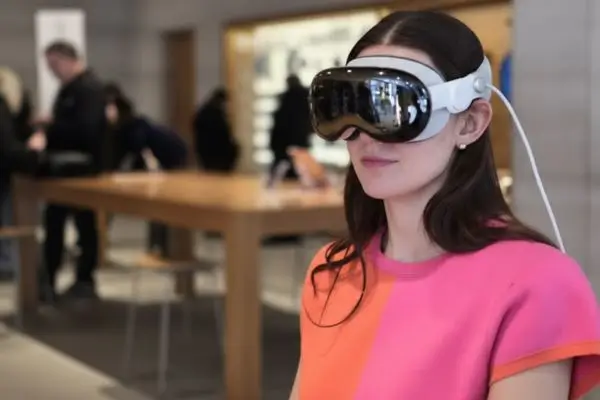
The “Magic” of Foveated Streaming
To understand why this is a big deal, we have to look at how our eyes work. Human vision is only sharp in a tiny central area called the fovea. Everything in your periphery is actually quite blurry. Your brain just does a great job of “filling in” the details.
Standard streaming sends a flat, high-resolution image across the entire screen. This is incredibly “heavy” data-wise. Foveated streaming uses the Vision Pro’s internal eye-tracking cameras to see exactly where you are looking. It then tells the host computer (like your gaming PC or a cloud server) to only send the maximum bitrate and detail to that specific spot. The rest of the scene is streamed at a much lower resolution.
The result?
- 10x Bandwidth Efficiency: You get a crystal-clear image where it counts without choking your Wi-Fi.
- Lower Latency: Less data to process means the “lag” between your head moving and the image updating drops significantly.
- Visual Fidelity: Because the bandwidth is concentrated, the central point of your vision can actually look better than it did before.
Why Steam Frame Enthusiasts are Jealous
Valve’s Steam Frame was designed from the ground up to be a “streaming-first” device. It was supposed to be the lightweight, affordable gateway to your Steam library. Its “most anticipated feature” was this exact foveated pipeline, which Valve claimed would finally make wireless PC VR “perfect.”
By adding this to the Vision Pro, Apple is essentially saying, “We can do the gaming stuff too.” With the new Foveated Streaming framework, developers can now connect the Vision Pro to local PCs or cloud endpoints (such as NVIDIA CloudXR).
Imagine playing a flight simulator where the Vision Pro renders the cockpit locally (keeping the text on the gauges sharp and lag-free), while the massive, processor-heavy world outside the window is streamed from a high-end PC using foveated streaming. That’s the “hybrid” future Apple is now selling.
Breaking the “Walled Garden” (Slowly)
For a long time, the Vision Pro felt isolated. It was great for watching movies or doing “spatial work,” but it wasn’t a “gamer’s” headset. This update changes that. Apple even provided a Windows OpenXR sample on GitHub.A rare move for a company that usually pretends Windows doesn’t exist.
By providing a low-level, host-agnostic API, Apple is opening the door for tools like ALVR and Virtual Desktop to turn the Vision Pro into the ultimate SteamVR display. We are already seeing reports of the PS VR2 Sense controllers working with the Vision Pro via third-party tools, and with foveated streaming now in the mix, the experience is finally becoming fluid enough for competitive play.
| Feature | Before visionOS 26.4 | After visionOS 26.4 |
| Streaming Quality | Uniform (often compressed) | Dynamic (High-fidelity at gaze) |
| PC VR Lag | Noticeable over Wi-Fi | Significantly reduced |
| Resource Usage | High stress on decoder | Optimized for eye-tracking |
| Compatibility | Limited / Proprietary | Low-level / Host-agnostic |
Is the Steam Frame Still Relevant?
You might wonder if this kills the Steam Frame before it even ships in volume. Not necessarily. The Steam Frame still has a massive advantage in weight (reportedly around 15.5 ounces) and ergonomics. The Vision Pro is a heavy piece of glass and aluminum; the Steam Frame is a purpose-built gaming tool.
However, for the enthusiast who already owns a Vision Pro, the “need” for a second gaming headset just evaporated. Apple has successfully neutralized one of the Steam Frame’s biggest technical advantages.
What This Means for You
If you’re a Vision Pro owner, keep an eye on your favorite streaming apps. Over the next few weeks, developers will be integrating this new API. You’ll likely see a “Foveated Streaming” toggle appear in settings.
When you turn it on, the “shimmer” and “compression artifacts” you used to see when moving your head quickly in a streamed game should vanish. It’s one of those rare updates that feels like a free hardware upgrade.
Apple might have been late to the foveated streaming party, but as usual, they arrived with enough polish to make everyone else look a little underdressed. The “Spatial Computing” era is finally starting to look a lot like a “High-End Gaming” era, and honestly, we’re here for it.
Nanotechnology Applications: 5 Top Fields Using This Powerful Tech