
For years, the “iPhone Fold” has felt like a tech industry ghost story. Something whispered about in supply chain meetings but never quite materialized on a stage in Cupertino. But as we move deeper into 2026, the whispers have turned into a roar. With Samsung, Google, and even OnePlus having several generations of foldables under their belts, the question is no longer if Apple will release a folding phone, but how it plans to reinvent a category that is finally maturing.
Table of Contents
Recent leaks from supply chain insiders and analysts suggest that 2026 is the definitive year. If the rumors hold true, Apple isn’t just making a phone that bends; they are trying to fix the “compromises” that have plagued the foldable market for years.
Here is everything we know so far about the iPhone Fold’s leaked price, design, display, and internals.https://hstech.io/
The Design: A “Book” That Refuses to Crease
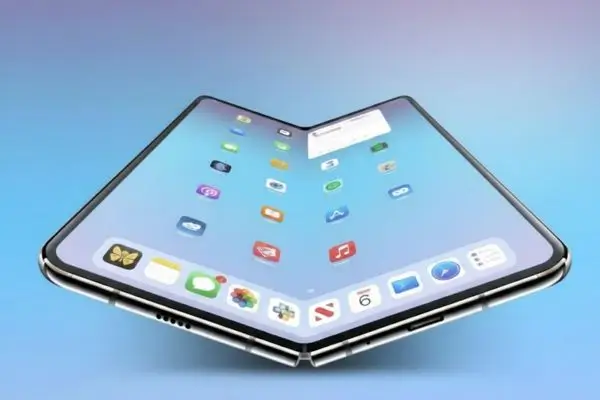
Unlike the clamshell “Flip” style that many predicted early on, the 2026 iPhone Fold is heavily rumored to be a book-style foldable, similar to the Galaxy Z Fold series. However, in typical Apple fashion, the focus is on refinement and “invisible” engineering.
The Hinge and “Liquidmetal”
The biggest hurdle for any foldable is the hinge. Leaks suggest Apple is utilizing a complex, multi-link hinge mechanism made of a titanium alloy or “Liquidmetal.” The goal is a waterdrop design that allows the phone to fold completely flat without a gap while minimizing mechanical stress on the OLED panel.
Goodbye, Crease?
The “holy grail” of foldables is a screen without a visible line down the middle. Apple is reportedly working with Samsung Display on a specialized panel that uses a chemically strengthened ultra-thin glass (UTG). Some reports even mention a “self-healing” polymer layer that can fill in micro-scratches from dust or debris, ensuring the display remains pristine for the projected five-year lifespan Apple is targeting.
Slim but Substantial
While competitors are racing to make foldables as thin as a standard phone, Apple is reportedly taking a different path. The iPhone Fold is rumored to be roughly 9.5mm thick when closed. It’s slightly chunkier than an iPhone 16 Pro, but this extra room is being used for something users have been begging for: battery life.
Display: Two Screens, One Seamless Experience
The iPhone Fold is essentially a “transformer.” It’s designed to be a standard flagship in your pocket and a mini iPad in your hand.
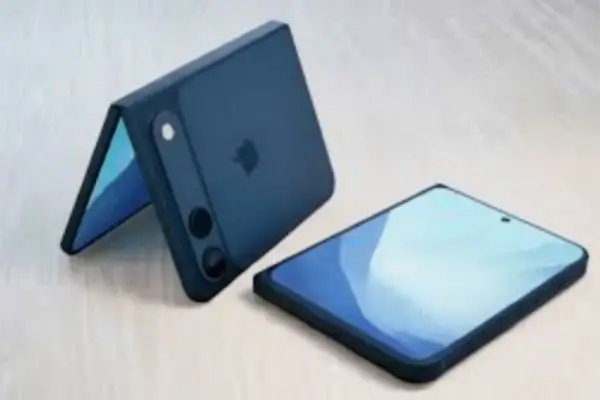
- Inner Display: A massive 7.7 to 7.8-inch LTPO OLED panel. This screen is expected to support ProMotion (120Hz) and could reach peak brightness above 3,000 nits.
- Cover Display: A 5.5-inch outer screen. Interestingly, this is smaller than the current iPhone “Pro” screens. The idea is to make the phone exceptionally easy to use with one hand when folded, serving as a “compact” phone that unfolds into a powerhouse.
The Battery: Breaking the Foldable Curse
One of the most exciting leaks regarding the 2026 model is the battery capacity. Traditionally, foldables have mediocre battery life because the hinge takes up so much internal space.
Apple is reportedly testing a dual-cell battery system with a total capacity between 5,400mAh and 5,800mAh. If these numbers are accurate, the iPhone Fold wouldn’t just have the best battery life of any foldable; it would likely outlast the iPhone 18 Pro Max. This is a massive shift for Apple, which has historically prioritized thinness over raw milliamp-hours.
Internals and Camera: Pro-Tier Power
Apple isn’t positioning the Fold as a niche, experimental device; it’s positioning it as its “Ultra” tier flagship.
- The Chipset: It will almost certainly run on the A20 Pro chip, built on TSMC’s cutting-edge 2nm process. This chip is expected to be a monster for “Apple Intelligence” (AI) tasks, which will likely be the Fold’s marketing centerpiece.
- RAM: To handle the intensive multitasking required for a tablet-sized screen, the Fold is expected to ship with 12GB of RAM as the baseline.
- Cameras: Expect a triple-lens setup on the rear, similar to the Pro Max. However, there’s a twist: leaks suggest the Face ID sensors might be moved under the display, or Apple might opt for a Touch ID sensor built into the power button to keep the internal display completely bezel-free and “all-screen.”
The Software: iOS 20 “Split-Screen.”
Hardware is only half the battle. iOS has long been criticized for its lack of true multitasking on the iPhone. With the iPhone Fold, Apple is expected to debut a specialized version of iOS 20 (likely called “FoldOS” or simply a “Split-View” enabled iOS). This would allow users to run three apps simultaneously, drag and drop content between windows, and use a “Continuity” feature that opens an app on the cover screen in a tablet layout when you open the device.
Leaked Price: Prepare Your Wallet
Innovation at this level doesn’t come cheap. If you thought the $1,199 Pro Max was expensive, the Fold is in another league entirely.
The most consistent price leaks suggest a starting price of $1,899-$1,999 for the 256GB model. Some high-end configurations with 1TB of storage could easily push past $2,399.
Why so expensive? Apple’s bill of materials for the folding display and the titanium hinge is reportedly double that of a standard iPhone. They are positioning this as a luxury productivity tool the “MacBook Pro” of phones.
Summary of Leaked Specs
| Feature | Leaked Detail |
| Release Date | September 2026 (Expected) |
| Main Display | 7.8-inch Foldable OLED (120Hz) |
| Cover Display | 5.5-inch OLED |
| Processor | A20 Pro (2nm) |
| Battery | 5,400 – 5,800mAh |
| RAM | 12GB |
| Storage | 256GB / 512GB / 1TB |
| Price | $1,899 – $2,399 |
Final Thoughts: Is it Worth the Wait?
We have seen Apple wait before. They weren’t the first to do 5G, they weren’t the first with widgets, and they certainly weren’t the first with AI. But when they finally enter a category, they usually do so with a level of polish that makes the “first movers” look like prototypes.
If the 2026 iPhone Fold truly delivers a crease-free screen and all-day battery life, it might be the first foldable that the average consumer actually wants to buy, rather than just admire from afar. It’s a steep price to pay, but for those who want an iPad and an iPhone in one pocketable device, the wait might finally be over.
Technology Solutions Professional: Guide + 5 Key Responsibilities