
The desire to witness the Northern Lights, or Aurora Borealis, is one of the world’s great travel pursuits, listed by many as a top life experience.1 This ethereal celestial dance, characterized by shifting curtains of green, pink, and red light, traditionally draws travelers to the remote corners of Scandinavia, Canada, and Iceland.
However, for those based in the United States, an incredible spectrum of aurora-viewing opportunities exists domestically—from the virtually guaranteed skies of the Alaskan Arctic to the challenging but profoundly rewarding dark-sky sanctuaries of the Lower 48. (hstech)
Table of Contents
Table of Contents
Where to See the Northern Lights: While Alaska offers the highest probability of sighting, the contiguous United States provides unique vantage points, often involving dramatic mountain or Great Lakes backdrops, provided solar activity is robust enough. Successfully chasing the aurora requires patience, specific preparation, deep scientific understanding, and a commitment to venturing into some of the most isolated locations in the nation.
Understanding the Aurora: The Science of the Celestial Dance
To become a successful aurora hunter, one must first grasp the magnificent cosmic engine that drives the light show. The Northern Lights are not merely a weather phenomenon; they are the result of intense solar activity colliding with Earth’s protective magnetic field.2
What Makes the Lights Glow?
The formation of the aurora is a captivating five-step process that begins 93 million miles away on the surface of the sun.2 First, the sun releases streams of electrically charged particles in what is known as the solar wind. Earth’s magnetic field, or magnetosphere, acts as a protective shield, intercepting this energy. These charged particles are then funneled toward the North and South Poles along the magnetic field lines.2
The light emission occurs when these particles finally collide with atmospheric gases at altitudes between 60 and 200 miles above Earth.2 The collision excites the gas molecules, causing them to emit light. The characteristic green most often seen is caused by oxygen interacting with the solar particles. Higher-energy particles hitting nitrogen or deeper oxygen layers can result in reds, blues, and purples, creating the stunning luminous curtains that dance across the sky.2
The Kp Index Demystified: Predicting Visibility in the US
The ability to see the aurora is quantified by the Planetary K-index (Kp), a crucial measurement that indicates the level of disturbance in Earth’s magnetic field due to solar activity.3 The Kp scale ranges from 0 (quiet) to 9 (severe geomagnetic storm).3
The Kp index is monitored closely by organizations such as the National Oceanic and Atmospheric Administration’s (NOAA) Space Weather Prediction Center (SWPC), which uses these readings to issue alerts and warnings. A high Kp level signifies increased geomagnetic activity, resulting in a brighter aurora that moves further south from the poles.3
The Critical Threshold: Kp Levels and the Lower 48
The aurora display is typically centered around the Auroral Oval, a ring of geomagnetic particles circling the magnetic pole. Fairbanks, Alaska, sits directly beneath this oval, meaning it offers reliable sightings even at low Kp levels (Kp 1-2).3 This geological reality makes Alaska the high-probability, planned destination for those seeking guaranteed visibility.7
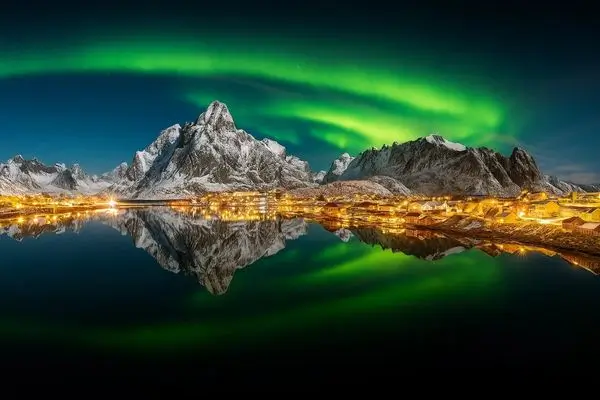
However, viewing the aurora from the contiguous 48 states transforms the pursuit into a calculated storm chase. To bring the Auroral Oval far enough south to reach the northern tier of the United States, a much higher level of activity is required.3 For a viewer along the northern edge of the US (e.g., Montana, Michigan, Maine) to see the light low on the horizon, a Kp index of 6 to 7 is generally necessary.3 For those seeking the best, most active displays, where the lights might be visible directly overhead, the activity must reach Kp 8 or 9—levels associated with severe geomagnetic storms.3
This visibility threshold is rooted in geomagnetic latitude, not geographic latitude, a subtle but critical distinction.3 The magnetic pole is offset from the geographic pole, which explains why states on the East Coast, like Maine, can sometimes see the aurora more reliably than slightly higher-latitude states on the West Coast, depending on the storm’s trajectory. This means that successful aurora hunting in the Lower 48 is a patient, reactive endeavor, relying on flexible travel plans and rapid response to short-term, powerful solar events.
Kp Index and Estimated Aurora Visibility
| Kp Level | Geomagnetic Activity | General US Visibility | Traveler Expectation |
| 0–2 | Quiet (G0) | Alaska (reliable, near the oval) | Dim, stationary glow near the horizon in high latitudes. |
| 3–5 | Minor Storm (G1) | Visible from very high latitudes in the Lower 48 (MT, MN, ME). | Noticeable but likely low on the horizon, active movement. |
| 6–7 | Moderate to Strong Storm (G2/G3) | Visible from northern tier states (MT, MI, ME, MN). | Bright, active curtains, excellent display potential. |
| 8–9 | Severe to Extreme Storm (G4/G5) | Observable far towards the equator. | Very bright, highly active, multi-colored display, potentially visible overhead. |
KP Level Geomagnetic Activity General US Visibility Traveler Expectation
Where to See the Northern Lights: Maximizing Your Chances
Successfully spotting the Northern Lights requires more than just traveling north; it demands specific planning around timing, equipment, and location.
Best Seasons and Times: Chasing Darkness
The aurora is technically active all day, but it can only be seen when the sky is completely dark.8 Therefore, the prime season aligns with the darkest nights. In Alaska, this runs from late August to mid-April, avoiding the continuous daylight of the midnight sun during summer.7 This fall-through-spring window also provides the longest hours of darkness in the Lower 48.
Within this season, timing is crucial. The aurora generally appears a few hours after sunset and often peaks in intensity around midnight.10 Optimal viewing hours are typically between 10:00 PM and 3:00 AM.1 Furthermore, travelers must consider the lunar cycle. A full moon can significantly wash out the dimmer auroras, so planning a trip around the new moon or crescent moon phases is highly recommended for maximum visibility.8
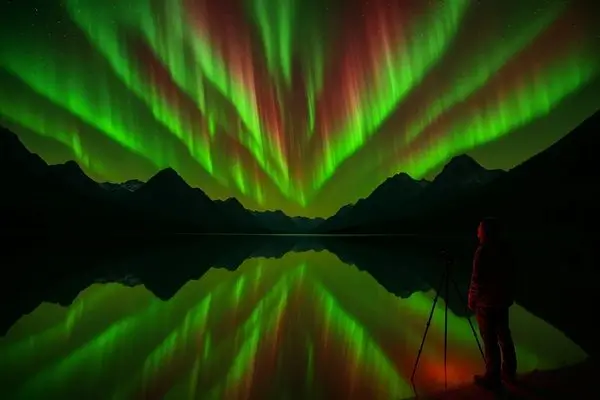
A key logistical factor recognized by those who operate viewing tours is the value of time invested. Due to the high variability of auroral intensity, even in high-probability areas, staying for a minimum of two to three nights significantly boosts the chances of catching a successful display.1 For many travelers, the additional cost of a multi-night stay is viewed as a necessary investment to ensure the trip’s ultimate success.
Northern Lights Tonight: 4 Ways to Check. Wonderful view of the Aurora
Essential Tools for Forecasting: Apps, Alerts, and Websites
Aurora forecasts are similar to weather forecasts—they offer critical guidance but are not perfectly accurate.1 For planning, hunters should monitor official data sources:
- Official Government Centers: The NOAA SWPC is the primary source for the Kp index and geomagnetic storm watches.4 The Geophysical Institute at the University of Alaska Fairbanks (UAF) also provides localized, up-to-the-minute forecast data.1
- Mobile Applications: Specialized apps are indispensable for real-time tracking. Applications like ‘My Aurora Forecast’ provide the current Kp index, display maps showing the strength of the aurora around the world (based on SWPC ovation forecasts), and offer free push notifications when activity is expected to be high.12 Other reliable tools include ‘Aurora Forecast’ and ‘SpaceWeatherLive ‘. 13
The Dark Sky Imperative: Why Light Pollution is the Enemy
Light pollution is the single greatest enemy of aurora viewing outside of cloud cover.8 The aurora is often faint on the horizon, and bright city lights can easily drown it out 11
Serious aurora hunters must travel to areas with minimal light interference, which are often quantified using the Bortle Scale (1 representing pristine darkness, 9 representing extreme light pollution).14 The ideal locations are designated International Dark Sky Parks (IDSPs) or Sanctuaries, which are rigorously protected areas recognized for their dark night skies.11 Katahdin Woods and Waters National Monument in Maine, for instance, is certified as a Dark Sky Sanctuary, possessing some of the darkest skies on the Eastern Seaboard 14
Once on location, visitors must commit to preserving night vision. This means turning off vehicle headlights, avoiding the use of white-light flashlights, and relying instead on headlamps equipped with a red light setting, which is far less disruptive to the eyes and helpful for setting up camera equipment.14
The 10 Stunning US Spots for Aurora Viewing
The following locations represent the premier opportunities for aurora viewing in the United States, balancing high-probability Alaskan destinations with isolated, high-latitude gems in the Lower 48.
Part 1: The Alaska Advantage (The Northern Bullseye)
Fairbanks, Alaska: The 90% Guarantee and the Aurora Oval
Fairbanks is, without question, the best place in the United States to reliably see the Northern Lights. Located just two degrees south of the Arctic Circle, it sits directly under the main Auroral Oval.7 This geographic advantage provides visitors with over 200 nights of visibility per year, giving travelers who commit to a three-night stay a reported 90% chance of a sighting.6 Travel is also relatively easy, with non-stop flights to Anchorage available from major US hubs, followed by a short flight or drive. Fairbanks 7
Unique Viewing Experiences:
The Fairbanks area is replete with infrastructure catering to aurora viewing.
- Chena Hot Springs Resort: World-renowned for being far removed from city light pollution, allowing guests the unique experience of viewing the lights from a natural geothermal hot tub between 10:00 PM and 3:00 AM.1
- Specialized Lodging: Accommodations are tailored to aurora hunting, such as the Aurora Borealis Lodge, located in the famous Cleary Summit area, which provides north-facing windows and viewing platforms for guests. 19 Other options include Borealis Basecamp (yurts/domes) and Northern Sky Lodge 20
- Guided Tours: Taking a guided tour is highly recommended, as guides know the best spots, explain the science, and often provide warm clothing and beverages, enhancing comfort during the long waits.7
Denali National Park & Preserve, Alaska: Wilderness and Isolation
While Fairbanks is the accessibility king, Denali offers unparalleled wilderness viewing. Situated south of the main auroral band, it requires slightly stronger auroral activity than Fairbanks, but its deep wilderness setting guarantees truly minimal light pollution.18 The pure, dark skies of Denali mean that even dimmer auroras can stand out dramatically against the vast, mountainous landscape. The viewing season runs from late August through mid-April, offering opportunities to combine aurora hunting with activities like dogsledding and ice fishing.7
Part 2: The Northern Borderlands (Mountains and Prairies)
Glacier National Park, Montana: Reflections on the Crown of the Continent
Glacier National Park offers one of the most stunning backdrops for an aurora display in the US: the majestic peaks of the Rocky Mountains reflecting off pristine water surfaces. The park’s dark skies provide a perfect canvas.23
Prime Viewing Spots:
- Lake McDonald: The shores of this glacier-carved lake, particularly near Apgar Village, provide an ideal spot for catching the aurora and its reflection over the water.23
- Backcountry Lakes: Bowman and Kintla lakes, located deep in the North Fork region, are more remote options for experienced backcountry explorers 23
Travelers should be aware that the park’s key thoroughfare, the Going-to-the-Sun Road, closes seasonally due to winter weather conditions.24 This limits access to some high-altitude viewpoints. Thus, the shoulder seasons of late September and early October often offer the best combination of strong solar activity potential (Kp 7+ needed here) and moderate accessibility.
Theodore Roosevelt National Park, North Dakota: Badlands and Big Skies
This remote National Park provides exceptional night sky viewing due to its location over 30 miles from the nearest large city.25 The high prairie deserts offer low humidity and vast, unimpaired views of the northern sky.26 Observers can drive to plateaus within both the South and North units for an elevated viewing perspective.25
While the park itself offers phenomenal dark skies, the surrounding region in western North Dakota faces potential light interference from oil and gas development.25 Therefore, aurora hunters should strive to distance themselves from nearby towns like Medora and Watford City and secure a spot deep within the park units. The nearest major airports are Bismarck (BIS) and the smaller regional airport in Dickinson (DIK).27
North Cascades National Park, Washington: Mountain Vistas and Diablo Lake
North Cascades National Park is a secluded destination in the Pacific Northwest known for its minimal light pollution and dramatic scenery near the Canadian border.29
Recommended Viewing Points:
- Diablo Lake Overlook: This spot is highly favored for providing unobstructed, panoramic views of the northern horizon.29 The lights often shimmer above the vibrant turquoise waters of Diablo Lake, creating a memorable scene.30
- Artist Point: Located in the nearby Mount Baker-Snoqualmie National Forest, this area offers elevated views where mountain silhouettes enhance the spectacle.29
Due to the park’s magnetic latitude, a Kp index of 7 or higher is typically required for a clear view, making vigilance for solar storms essential. The best viewing windows are often in the fall before heavy snow accumulation limits access to high mountain roads.
Part 3: The Great Lakes Gems (Reflections on Water)
The vast, dark expanses of the Great Lakes offer unique coastal viewing opportunities, utilizing the water’s surface to reflect the lights in a stunning mirror effect.18
Voyageurs National Park, Minnesota: Wilderness Canoes and Clear Views
Northern Minnesota, especially the area near the Boundary Waters Canoe Area Wilderness, is a hotspot for dark skies and aurora potential.18 Voyageurs National Park, which is free to enter, is defined by its extensive network of waterways and islands.31
The park offers secluded viewing locations perfect for catching the Northern Lights over the vast lakes.18 While the aurora is most active in winter, travelers must plan carefully, as lake ice conditions can be hazardous in the shoulder seasons.31 Closest airports for access include Range Regional Airport (HIB) and Duluth International Airport (DLH). .32
Headlands International Dark Sky Park, Michigan: Accessible Sanctuary
Headlands is one of the most accessible and reliable viewing locations outside of Alaska, thanks to its certification as an International Dark Sky Park.11 Located near Mackinaw City, on the northern tip of Michigan’s Lower Peninsula, Headlands offers a critical advantage: it provides exceptional dark skies directly over Lake Michigan 18
The proximity of Mackinaw City means accommodation is plentiful, just a few miles from the park, with numerous hotels available.33 The Great Lakes location means that when the lights do appear (requiring Kp 6-7), the view often features the ethereal reflection of the aurora over the calm water, providing an unforgettable experience.18
Apostle Islands National Lakeshore, Wisconsin: Lake Superior Backdrops
Offering a captivating coastal viewing experience, the Apostle Islands National Lakeshore along Lake Superior provides dark skies and dramatic scenery.22 The views are framed by sandy beaches, sea caves, and iconic lighthouses, which act as natural foreground subjects for photographers.
The sheer size of Lake Superior ensures a vast, dark northern horizon, which is necessary when chasing events that require a higher Kp index (generally Kp 7+ in this region). Washington Island, in particular, is noted as a strong viewing location in Wisconsin 22
Part 4: The Eastern Outposts and Hidden Treasures
Katahdin Woods and Waters National Monument, Maine: East Coast’s Dark Sky Sanctuary
Katahdin Woods and Waters is a beacon of darkness on the eastern seaboard. Certified as an International Dark Sky Sanctuary in 2020, it boasts some of the deepest wilderness and darkest skies east of the Mississippi River.14 The monument is committed to preserving its night environment, making it an ideal location for stargazing, Milky Way viewing, and, during periods of high solar activity (Kp 7+), a chance to see the aurora.15
The experience here is rugged and isolated; visitors should note that all roads within the monument are unpaved.15 This location is suited for dedicated travelers prepared for a true backcountry adventure.
Idaho Panhandle National Forests, Idaho: Mirror Effect on Priest Lake
The Idaho Panhandle National Forests offer a vast, high-latitude viewing area in the western US. The area’s unique draw is its collection of large, deep lakes, including Priest Lake and Lake Pend Oreille.17 During strong auroral events (Kp 7+), these still waters create an incredible mirror effect, doubling the light show.
This region is characterized by immense wilderness, home to significant populations of wildlife, including elk, deer, wolves, and grizzly bears.35 Viewers planning long nighttime stays or winter camping must exercise extreme caution and adhere strictly to wilderness safety protocols, distinguishing this spot as a truly wild chase location.
The Essential Packing List: Staying Warm Under the Stars
Successful aurora viewing hinges on comfort and safety. Clear skies, particularly in Alaska, often correlate with extremely cold temperatures.1 Since aurora hunting requires standing still outdoors for hours between 10:00 PM and 3:00 AM, preparation must focus on mitigating wind and preventing hypothermia.16
Layering Like an Arctic Expert
The strategy for staying warm must be built on the principle of layering:
- Base Layer: This layer, worn closest to the skin, must be thermal and moisture-wicking, such as Merino wool or high-quality thermal underwear. This is crucial for keeping dry, as dampness leads to cold.16
- Mid Layer: A fleece jacket or insulated down jacket provides bulk heat retention on top of the base layers.16
- Outer Shell: This must be a windproof and waterproof parka and ski trousers. This shell shields against the wind chill, which significantly drops effective temperatures, and protects against snow and dampness.36
Hands, Feet, and Head: The Frostbite Battleground
The extremities are the most vulnerable parts of the body during extended cold exposure:
- Foot Protection: Insulated, waterproof winter boots are mandatory, often rated to temperatures as low as -22°F (-30°C). They must be roomy enough to accommodate thick, double-layered wool socks, such as Merino wool.16
- Hand Protection: Waterproof, insulated gloves or mittens are necessary. Because camera operation demands dexterity, many travelers wear thin, touchscreen-compatible liner gloves under their heavy outer mitts. This allows for quick setting adjustments without exposing bare skin to rapid freezing.16
- Head and Face: A warm hat (beanie) that fully covers the ears is essential. A neck gaiter, scarf, or balaclava is vital for protecting the face, especially against cold winds that can quickly cause discomfort or injury.16
Accessories That Save the Night
In addition to clothing, several small items can dramatically increase comfort and success:
- Warmers: Disposable hand and toe warmers are vital for providing auxiliary heat inside boots and mittens, acting as small lifesavers during long, cold waits.16
- Navigation and Safety: A headlamp equipped with a red light function is essential for navigating darkness without destroying the night vision of the observer or others. This light source is also highly practical for changing camera settings in the dark.14
- Comfort and Energy: A Thermos filled with hot chocolate, tea, or soup offers internal warmth, providing comfort during long stretches of monitoring the northern sky 16
Capturing the Moment: Photography Tips for the Aurora
Documenting the Northern Lights is challenging, as the low light and rapid movement require specific manual camera settings and extreme stability.
Gear Essentials: Tripods and Power Banks
Stability is non-negotiable for aurora photography. Because exposures often last multiple seconds, a sturdy tripod is absolutely required to prevent blurry images.37
Crucially, the extreme cold rapidly drains battery life.36 For serious photography, travelers must carry multiple spare batteries and a high-capacity power bank. Batteries should be kept warm—such as in an internal jacket pocket—until immediately before use.36 Taking photographs in RAW format, if the device allows, is also highly recommended, as it retains maximum data for editing and adjusting white balance later.37
The Magic Settings: Aperture, ISO, and Shutter Speed
The camera must be set to full Manual mode (M) to control the three core variables:
- Aperture (f-stop): The widest aperture your lens allows (the lowest f-number) should be used, typically f/2.8 to f/4. A wide aperture maximizes the light-gathering capability of the lens.38
- ISO: Start at ISO 1600. This is a good balance between light sensitivity and acceptable image noise. If the sky is extremely dark, the ISO can be increased up to 3200. If the moon is bright, ISO 800 may be adequate.37
- Shutter Speed: The starting point is often 15 seconds.38 However, if the aurora is highly active, moving quickly across the sky, the shutter speed must be shortened (to 5–10 seconds) to capture the definition of the light curtains without blurring the movement. Conversely, a faint, slow aurora can benefit from a longer exposure (20–25 seconds).38
Focus in the Dark: Manual Adjustments for Pin-Sharp Stars
Auto-focus systems invariably fail in the pitch-black conditions necessary for aurora viewing. Manual focus is essential.37 The best technique is to switch to manual focus and locate a bright, distant star or planet in the sky. Using the camera’s live view function, zoom in on the star and adjust the focus ring until the star appears as small and sharp as possible.37 This sets the focus to infinity, ensuring the stars and the distant aurora are perfectly sharp.
Beyond the Lights: Cultural Stories and the Chase
The pursuit of the Northern Lights is an act of travel deeply rooted in human history and wonder. For millennia, these dancing lights have inspired powerful mythologies that underscore the emotional impact of the aurora.
Myths and Legends of the Aurora Borealis
The striking colors and seemingly otherworldly movement of the lights prompted countless traditional explanations across polar cultures.39 Many Indigenous Arctic communities, including various Inuit groups, believed the lights were the spirits of the dead playing a game, sometimes using a walrus skull or a human skull as the ball.39 Indigenous Greenlanders held the belief that the lights represented the dancing spirits of children who had died at birth.39
In Norse mythology, the lights were seen as the shining armor and helmets of the Valkyries—warrior women who rode their horses, guiding fallen soldiers to Valhalla.39 Conversely, some communities, such as the Fox Native Americans in Wisconsin, viewed the aurora with foreboding, seeing them as their slain enemies preparing for revenge.39 Understanding these traditional tales adds a profound cultural dimension to the chase.
Why the Pursuit is Part of the Magic
Ultimately, the inherent unpredictability of the aurora is what makes a successful sighting so rewarding. Unlike visiting a statue or a scheduled performance, the Northern Lights are never guaranteed; there is always an element of luck involved.40 Even in Yellowknife, Canada, a famous viewing spot, tours often rely on the hope that the clouds will lift.41
The magic of the chase lies in the dedication required—the patience of waiting in the dark, the preparedness for the extreme cold, and the flexibility needed to react to real-time space weather alerts. When the skies finally erupt in green and red light, often hours after sunset, the experience is not just a visual spectacle but a deeply felt reward for perseverance, transforming the patient traveler into a true celestial hunter.41
Conclusions and Recommendations
The United States offers a diverse and comprehensive landscape for aurora tourism, ranging from guaranteed, infrastructure-rich experiences in Alaska to rugged, high-reward storm-chasing expeditions in the Lower 48.
For travelers prioritizing a high probability of sighting with minimal complexity, Fairbanks, Alaska, remains the undisputed primary recommendation, necessitating a minimum stay of two to three nights to capitalize on the 90% visibility rate.1
For adventurers in the contiguous US, success is inextricably linked to geomagnetic activity. Travelers must accept that Lower 48 sightings are dependent on Kp 6-9 storm events and require proactive forecasting using tools like NOAA SWPC data and specialized apps.3 Furthermore, optimal viewing hinges on strict adherence to light pollution avoidance, making International Dark Sky locations like Headlands IDSP (Michigan) and Katahdin Woods and Waters NM (Maine) critical destinations.
The final, unifying recommendation for all aurora hunters is the mandatory investment in preparation: a detailed layering system, including insulated, windproof outerwear and specialized hand/foot warmers, is not optional but essential for enduring the cold temperatures that often accompany the clear skies necessary for this unforgettable natural phenomenon.1